Unofficial Block Planning Utility

Minecraft Pixel Art Generator

Turn an image into a local Minecraft block plan with materials, chunk guides, symbols, .schem, .litematic, PNG, TXT, and JSON export.Read more

Preview examples

What the Minecraft pixel art generator exports

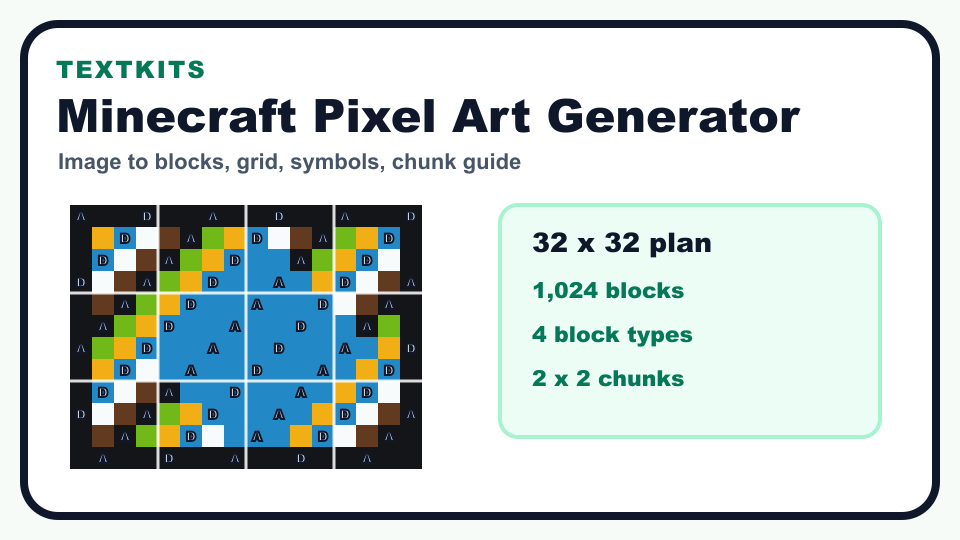
TextKits Minecraft pixel art generator sample block preview with grid and symbols
A browser-local Minecraft pixel art block plan with a chunk grid, symbol overlay, and material counts that match the generated plan.
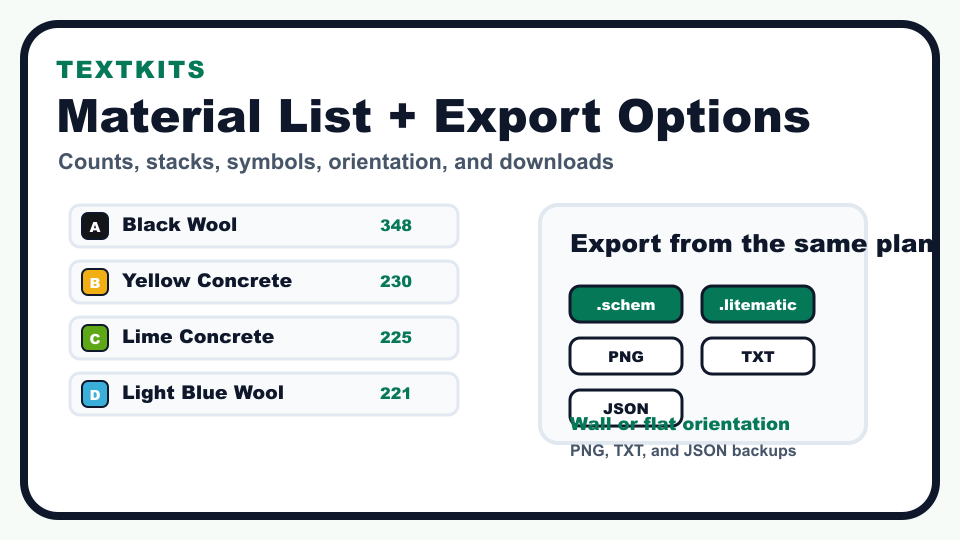
Minecraft pixel art material list and .schem .litematic export preview from TextKits
A material list and export preview showing stack math, wall or flat orientation, and .schem, .litematic, PNG, TXT, and JSON downloads.

Fast workflow

How to generate Minecraft pixel art from an image

The Minecraft pixel art generator begins with the part that matters most: the image. Choose a PNG, JPG, WebP, or GIF from your device and the page reads it locally into a small canvas. Nothing needs to leave the browser for the core workflow. Once the image is loaded, the tool resizes it to the block dimensions you choose, samples the pixels, and matches every square to the nearest block color in the selected palette.

Start with a small plan if you want a build that is easy to finish. A 16 x 16 logo uses 256 blocks, a 32 x 32 icon uses 1,024 blocks, and larger plans quickly become real construction projects. The preset buttons make those jumps visible, while custom width and height fields let you fit banners, map-style layouts, or tall characters without guessing.

The preview is designed for building, not just looking. Thin grid lines show every block, brighter chunk lines appear every 16 blocks, and symbol labels help separate colors that look close on screen. That makes the exported PNG useful as a second-screen build guide beside the TXT material list.

Buildability

Use palettes and material counts before you place blocks

A Minecraft pixel art generator is only useful when the result can be built. That is why the page includes multiple palette profiles instead of one generic color matcher. Balanced is the default broad match across concrete, wool, terracotta, and natural block colors. Cheap Survival keeps the plan closer to common blocks such as wool, stone, sand, snow, and planks. Wool Only is simple and predictable for classic pixel art. Bright Concrete gives stronger logo colors. Map Art leans into natural and terracotta colors for flat viewing.

The material list shows each matched block with a symbol, a total count, and stack math. If one color suddenly needs thousands of blocks, you can lower the dimensions or switch to a cheaper palette before you start collecting resources. The buildability score is a quick warning based on total block count and unique block types, not a promise that the project is easy in every world.

The preview can zoom from a compact overview into a larger block-by-block view, so a 128 x 128 plan remains inspectable instead of shrinking into a tiny thumbnail. The material list switches into a compact two-column layout on wider screens, keeping large palettes readable beside the preview.

In-game exports

Download files for Minecraft build tools

This Minecraft pixel art generator exports .schem files for WorldEdit or FAWE and .litematic files for Litematica. The PNG export remains useful as a visual reference, TXT gives you a material list, and JSON keeps the block grid available for custom workflows.

The schematic exports are generated from the same block grid and palette counts shown on the page, so the downloaded structure matches the preview you inspected. The files target Java-edition mod workflows; Bedrock import, server permissions, mod versions, and paste limits still depend on the environment where you load them.

The tool is unofficial and not affiliated with Minecraft, Mojang, or Microsoft. Its block colors are practical approximations for planning pixel art, not official game textures or a guarantee of how every shader pack, resource pack, monitor, or map renderer will display the final build.

Minecraft pixel art generator FAQ

Practical answers about browser-local image conversion, block palettes, material counts, export limits, and build sizing.

Is this Minecraft pixel art generator free?

+
Yes. The TextKits Minecraft pixel art generator runs in your browser, starts with a sample plan, and does not require an account for upload, preview, material counting, .schem, .litematic, PNG, TXT, or JSON export.

Does the tool upload my image to a server?

+
No. Image conversion happens locally in the browser. The file is read into a canvas so the page can resize it into blocks, match colors to a selected palette, and draw the build preview.

Can I export schematic or Litematica files?

+
Yes. The tool exports a Sponge .schem file for WorldEdit or FAWE and a .litematic file for Litematica, plus PNG, TXT, and JSON backups. It still stays browser-local and unofficial, so test the file in your exact Minecraft/mod setup before relying on it for a finished world.

What size should I choose for Minecraft pixel art?

+
Start with 16 or 32 blocks for survival builds and logos. Use 48, 64, or 128 only when you are ready to handle more materials, more chunks, and more alignment checks.

Which palette is best for survival builds?

+
Balanced is the default broad palette with 81 concrete, wool, terracotta, and natural block colors. Cheap Survival keeps the block set practical with common wool, stone, sand, snow, and wood colors; Wool Only is simpler, Bright Concrete gives crisper logos, and Map Art favors natural and terracotta colors.