Paste styled text
Paste up to 320 characters. The converter accepts copy-paste Unicode such as mathematical alphabets, fullwidth, circled, superscript or subscript, boxed text, combining marks, flipped characters, and selected lookalikes.
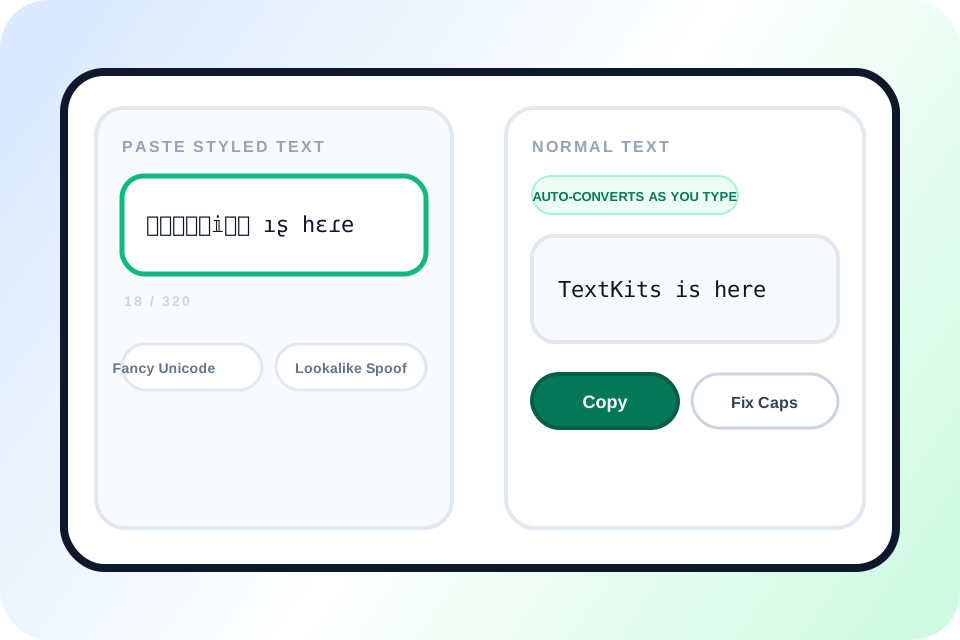
Fancy Text Back To Plain Text
a clean plain-text version you can actually reuse.
Paste styled text
Normal text
Quick examples
Runs locally in your browser.
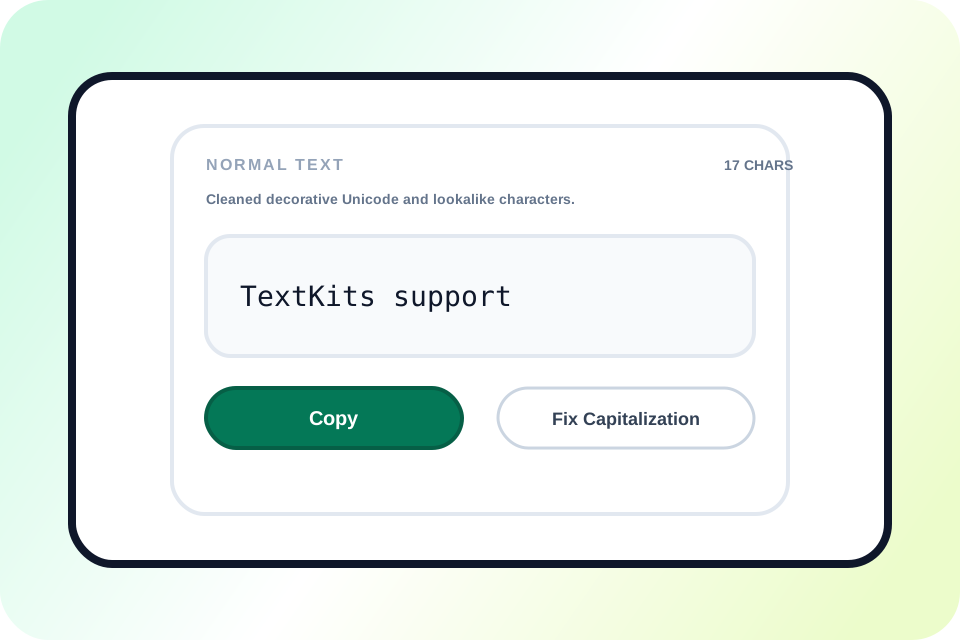
The visible workflow is simple: paste the styled text, watch the normal version update live, copy it, and optionally fix capitalization.
Paste up to 320 characters. The converter accepts copy-paste Unicode such as mathematical alphabets, fullwidth, circled, superscript or subscript, boxed text, combining marks, flipped characters, and selected lookalikes.
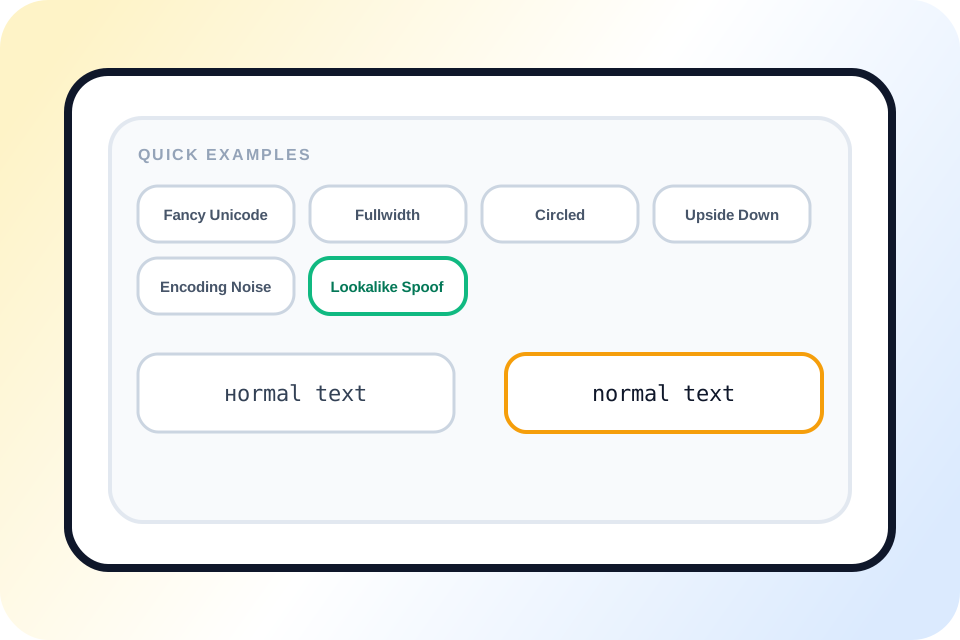
The Normal text panel updates without a separate Convert button. A status line reports the cleanup it detected, while input that is already normal remains unchanged.
Once the result looks right, copy the plain-text version and paste it into your message, document, profile, or form.
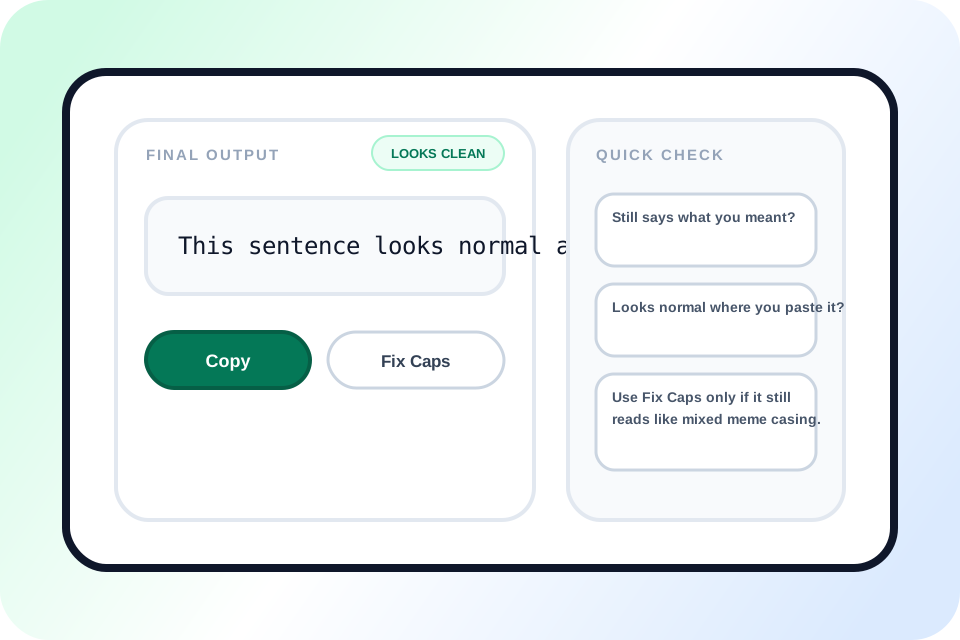
Use Fix capitalization only after reviewing the conversion. It lowercases the line and restores sentence starts, so it can also change intentional names, acronyms, or custom casing.
See how removing text font styling, Unicode normalization, and copy-ready output work together on one page.
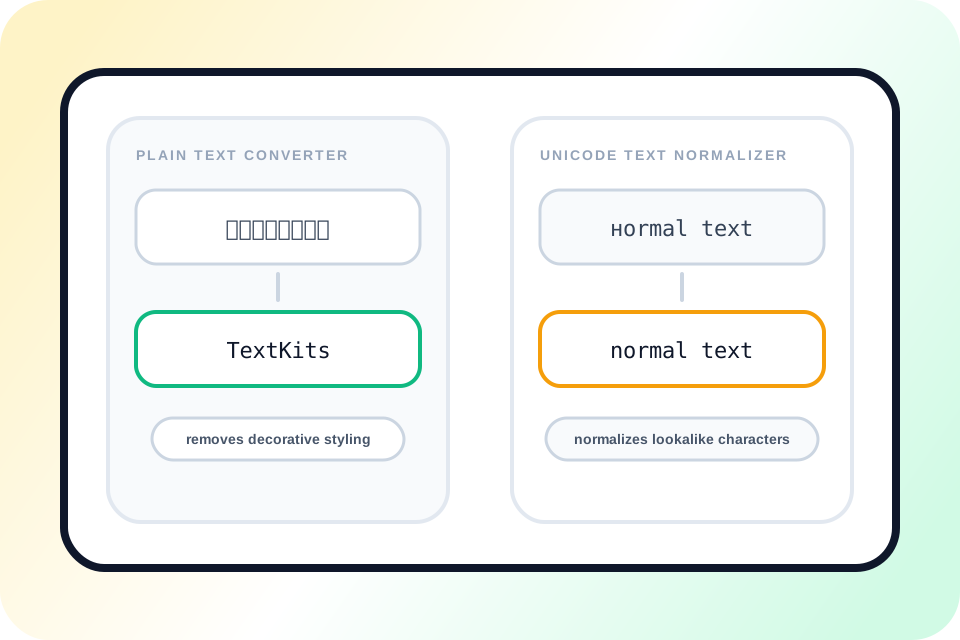
This normal font converter works on copy-paste characters, not fonts installed on a phone or computer. It maps supported decorative Unicode back to ordinary letters and numbers, removes selected combining marks and wrappers, and can reverse strongly detected flipped text.
People often call these characters a fancy font, but copied text is usually Unicode rather than a downloadable typeface. The converter does not identify a font family or change device font settings. To apply a new copyable style after cleanup, use Bold Font Free Copy Paste for clean emphasis or the weird text generator for more decorative output.
The 11 quick examples cover mathematical Unicode, fullwidth text, circled letters, superscript and subscript characters, upside-down text, combining marks, boxed letters, decorative separators, selected lookalikes, uwu wording, and encoding noise.
Verified results include Wide text 123 from fullwidth input, paypal support from the built-in Cyrillic lookalike sample, and TextKits is here. after removing glitch marks. To create test input for the reverse workflow, use the corrupt text generator and upside-down text generator pages.
The result panel returns one normalized line plus a short status such as decorative Unicode, flipped characters, lookalikes, encoding noise, or casual speech patterns. It does not guess the name of the original font or provide a forensic style report.
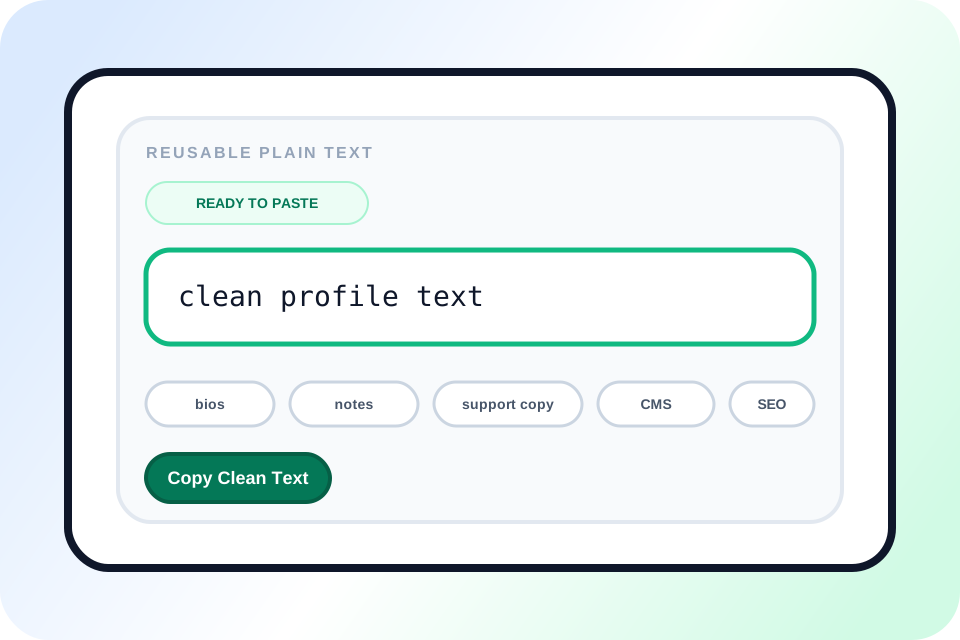
That narrower job is useful for messages, forms, notes, CMS fields, and spreadsheets where ordinary characters matter more than preserving the visual decoration. The source stays in the input box so you can compare it with the result before copying.
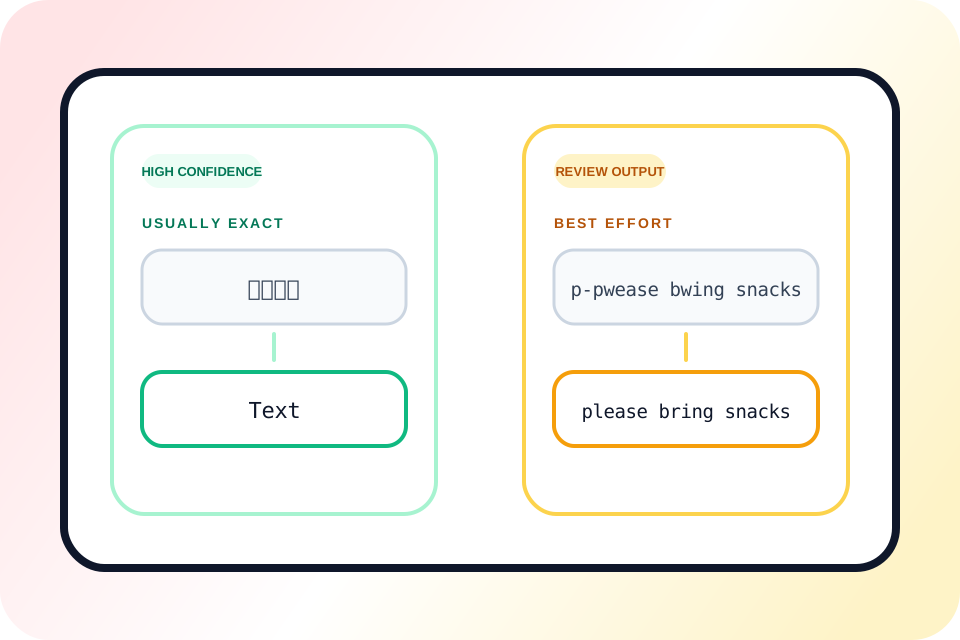
See where this workflow helps most, when cleanup is approximate, and what to check before you trust the final plain-text output.
Convert This Font to Normal works best on short, copyable text whose characters carry the visual style: bios, usernames, comments, form values, support examples, and notes. The 320-character limit keeps each comparison visible in the two text panels.
It cannot inspect a screenshot, identify a downloaded typeface, or reset the font on a phone, browser, or document. If the source is an image, transcribe it first. If you want to style normal text after the cleanup, old timey text generator is one optional follow-up.
A plain-text conversion maps supported decorative alphabets, boxes, wrappers, and combining marks back toward ordinary characters. For example, mathematical script and fullwidth letters return to readable Latin text.
Unicode normalization covers selected lookalikes, compatibility forms, flipped characters, and common mojibake patterns. It is intentionally guarded: unfamiliar scripts and ambiguous sequences can remain unchanged instead of being guessed.
Some mappings are direct, but normalization can still be lossy. Superscript and subscript digits return to baseline digits, small caps may lose capitalization, and visual wrappers are removed rather than described.
The browser tests show the boundaries: decorated text retained one heart separator, upside-down text retained a combining dot, and the encoding example repaired “Café” but not the full “déjà vu” phrase. These cases need a human check rather than a promise of exact recovery.
Keep the source in the input panel while you compare spelling, punctuation, numbers, and capitalization. Technical notation deserves extra care because H₂O becomes H2O after the subscript is flattened.
Use Copy when the normalized line is correct. Use Fix capitalization only for unwanted alternating case; it deliberately lowercases names, acronyms, and custom casing before rebuilding sentence starts.
Use these quick answers to understand how Convert This Font to Normal handles fancy text cleanup, Unicode normalization, approximate recovery, and plain-text output. If you need the forward styling step first, start with Styled Text Font Style.